Tag Archives: Web3

30 Years of Marketing vs. The Blockchain Check Out Operly

“I’ve been doing internet marketing for 30 years. I started when people thought the internet was a fad. I’ve sold GPS tracking devices, health and nutrition products, and I’ve watched every single platform rise and fall. And right now? Blockchain is doing to marketing exactly what the internet did in 1995 ­ and most people are making the exact same mistakes.”

ACT 1: THE PATTERN “Here’s what I’ve learned from three decades in the trenches. Every major shift in marketing follows the same pattern:

Phase 1: Ignore it. Everyone says it’s a scam or a fad. That’s where most people were with the internet in ’95. That’s where most people are with blockchain right now.

Phase 2: Early adopters win. The people who moved early on Google Ads, on Facebook, on YouTube ­ they didn’t just make money. They built empires. The same thing is happening right now in Web3.

Phase 3: Everyone catches up. And then the window closes. I’ve lived through this cycle three times. I’m not going to sit here and watch it happen again without saying something.”

ACT 2: WHAT BLOCKCHAIN ACTUALLY CHANGES “So what does blockchain actually do for marketing? Let me break it down plain:

Trust. In the old world, you had to earn trust through reviews, testimonials, and brand reputation. In the blockchain world, everything is transparent and verifiable on-chain. Your track record follows you everywhere.

Ownership. You own your audience. No algorithm can take them away from you. No platform can shadowban you into oblivion. If you’ve built a community on Web3, that community is yours. Speed. Smart contracts, instant payments, global reach without banks in the middle. I remember when international wire transfers took weeks. Now? Seconds. The people who understand these three things are going to dominate the next decade of marketing.”

ACT 3: THE MISTAKES I SEE “But here’s where I see people screwing up ­ and I see it every single day:

Mistake #1: Treating blockchain like a get-rich-quick scheme. This is not a lottery ticket. It’s a technology. You need to learn it, understand it, and apply it just like you learned email marketing or SEO.

Mistake #2: Ignoring the fundamentals. Blockchain doesn’t replace good marketing. It amplifies it. If your offer sucks on a website, it’s going to suck on-chain too.

Mistake #3: Waiting for ‘perfect.’ I see people studying for months and never actually doing anything. Start messy. Start small. You’ll learn more from one failed project than from a year of reading articles.”

Summary + CTA “Look, I’m not here to sell you anything. I’m here because I’ve spent 30 years watching people either embrace change or get left behind by it. And I’d rather be the guy who tells you what’s coming than the guy who says ‘I told you so’ after. If this resonated with you, drop a comment. Tell me ­ where are you in your blockchain journey? Are you just starting out, or have you been in this for a while? I want to hear from you. And if you want to see how I’m actually building this out ­ the tools, the strategy, and more.

Click on the following link to get Operly.

https://go.getoperly.ai/video?ref=james-sapp-000c
Connect Crypto BlockChain Academy

What is Crypto and Why Crypto?

As always this is information for educational purposes and be sure to DYOR – Do Your Own Research.  

Key Objectives

By the end of this lesson, learners will be able to:

  1. Define cryptocurrency and explain how it differs from traditional money.
  2. Explain the historical context that led to cryptocurrency’s creation.
  3. Identify real-world use cases and why people choose crypto over traditional systems.
  4. Summarize the potential future impact of cryptocurrency.

Overview

This lesson introduces cryptocurrency as a digital, decentralized form of money that operates without a central authority.
We’ll cover:

  • What crypto is and how it works.
  • The historical context that gave rise to it.
  • Why people use it -from financial freedom to faster payments.
  • The risks, rewards, and myths surrounding it.
  • Its role in shaping the future of finance and technology.

Main Talking Points

1. Definition of Cryptocurrency

  • Digital or virtual currency secured by cryptography.
  • Exists on a blockchain – a public, transparent ledger.
  • Examples: Bitcoin (BTC), Ethereum (ETH), Solana (SOL).

2. A Brief History & Context

Before Crypto:

  • Barter Coins Paper Money Digital Banking: Money evolved to become more efficient, but also more centralized.
  • Trust in Middlemen: Banks and governments became gatekeepers of value.
  • Problems with the System: 2008 Global Financial Crisis exposed risks of centralization and lack of transparency.

The Birth of Bitcoin (2009):
Created by Satoshi Nakamoto as a response to the crisis.
Bitcoin’s mission: Peer-to-peer electronic cash without banks.
The first Bitcoin block included a hidden message referencing bank bailouts , a political and economic statement.

Evolution After Bitcoin:

  • Ethereum (2015): Added smart contracts � programs that run on blockchain.

  • Altcoins & Stablecoins: New forms of crypto for payments, governance, and stable value.

  • DeFi, NFTs, Web3: Crypto expanded beyond money into apps, art, and decentralized communities.

Framing the Context:
Crypto emerged not just as new money, but as a response to distrust in centralized systems, aiming to create a more transparent, borderless, and user-controlled economy.

3. How It Works

  • Blockchain Technology: Immutable records, peer-to-peer transactions.

  • Decentralization: No single authority controls it.

  • Wallets: Store and send crypto (hot vs cold, custodial vs non-custodial).

4. Why Crypto?

  • Financial Freedom: You own and control your assets.

  • Borderless Payments: Send money anywhere, instantly, often with lower fees.

  • Transparency & Security: Publicly verifiable transactions, resistant to fraud.

  • Innovation: Smart contracts, DeFi, NFTs, tokenization.

5. Risks & Challenges

  • Price volatility.
  • Scams and phishing attacks.
  • Regulatory uncertainty.
  • Technical barriers for beginners.

6. Real-World Use Cases

  • Cross-border remittances.
  • Micropayments for creators.
  • Decentralized finance (DeFi) services.
  • Supply chain transparency.
  • Community governance and crowdfunding.

7. The Future of Crypto

  • Possible integration with traditional banking.
  • Mass adoption through user-friendly apps.
  • Role in Web3 a more decentralized internet.

Key Takeaways

  • Crypto is more than just an investment it’s a new way to store, transfer, and manage value.
  • The 2008 financial crisis was a turning point that inspired Bitcoin’s creation.
  • It offers unique advantages over traditional finance, especially in speed, access, and transparency.
  • Risks exist, but with knowledge and caution, crypto can be a powerful tool for individuals and communities.
  • Adoption is growing, and its potential impact on finance and technology is massive.

Click Here to signup for your free wallet

https://share.connectunited.com/invite?r=068268&p=c2hqf1sk47zw1z20nm&sid=24

And I’ll get you some free tokens plus provide you with more information on how to get started saving on your electric bill.

Keep this in mind back in 2010 Bitcoin was being given away. An amount if you had hung onto
would be worth over a half million dollars today. I’m not saying that the tokens we are giving away will be worth that much someday,  you just never know.
Thank you for your time.

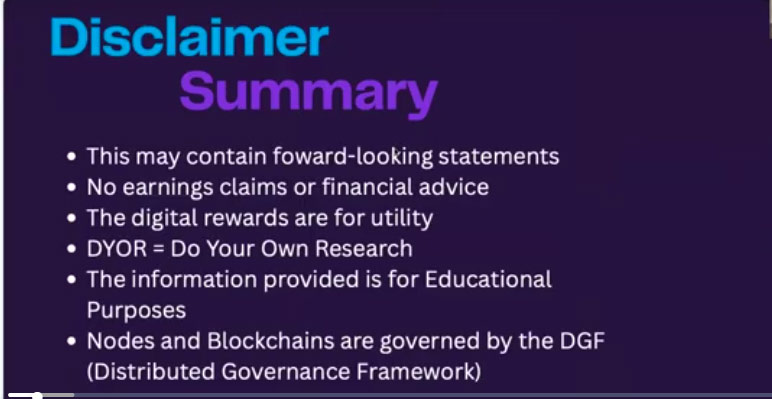
*This email may contain Forward Looking Statements
Do Your Own Homework
This is Educational not Financial Advice
No Income Claims
Governed by the Distributed Governance Framework (DGF)